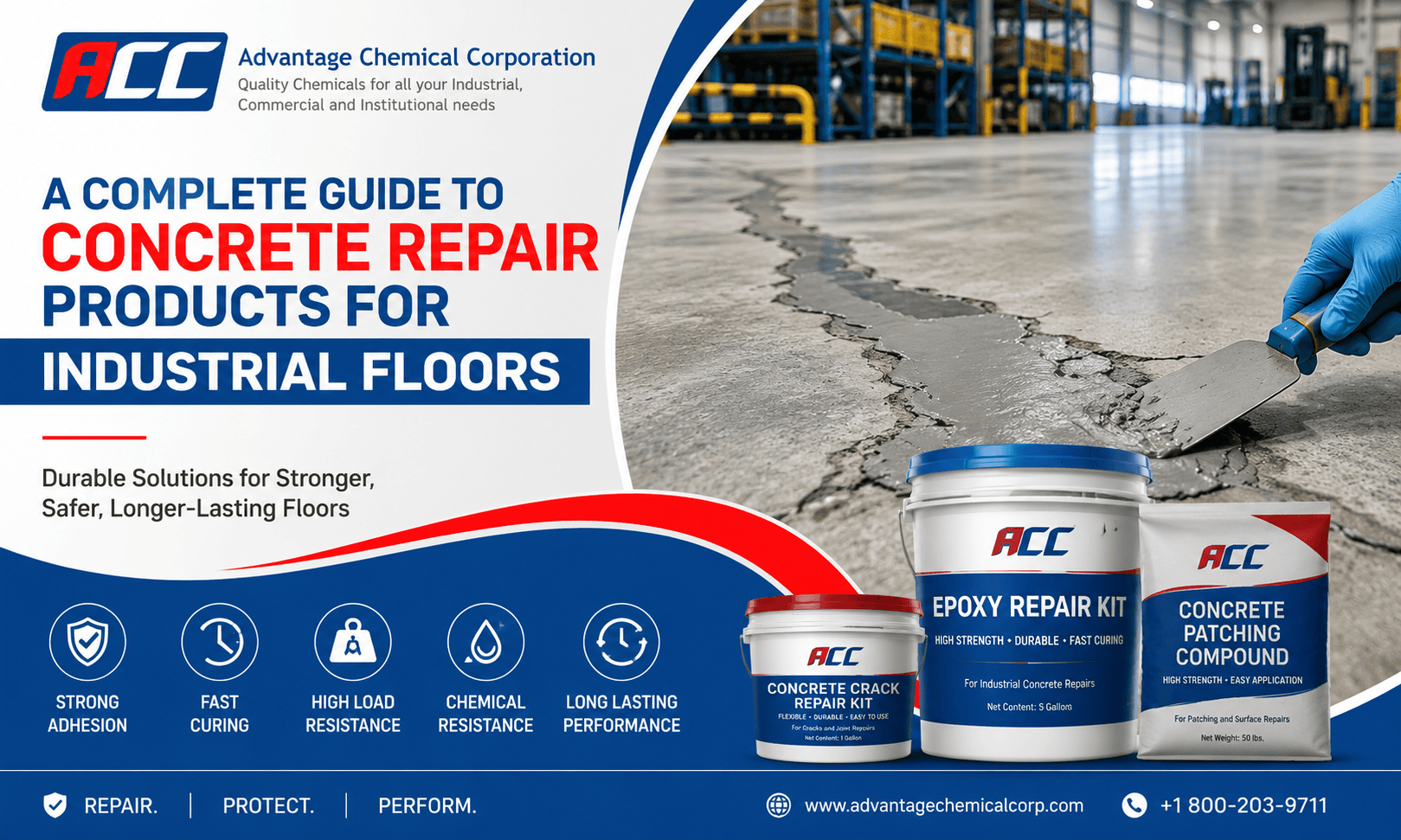
Industrial floors experience constant pressure from heavy machinery, forklifts, foot traffic, chemical exposure, and frequent material handling. Over time, these conditions can cause cracks, surface deterioration, chipped edges, and uneven flooring. Addressing these issues promptly helps maintain a safer working environment, protect equipment, and extend the service life of concrete surfaces.
Choosing the right concrete repair products is essential for achieving durable results. Advantage Chemical Corporation offers specialty chemical and maintenance products that support industrial and commercial maintenance needs. Understanding the different repair solutions available can help facility managers, maintenance professionals, and contractors make informed decisions for their flooring projects.
Why Industrial Concrete Floors Need Regular Maintenance
Concrete is known for its strength and durability, but it is not immune to damage. Repeated loading, temperature fluctuations, moisture penetration, and improper installation can gradually weaken concrete surfaces. Small cracks may expand, while worn areas can become difficult to clean and maintain.
Regular inspections help identify problems before they require extensive repairs. Early intervention can reduce maintenance costs, minimize operational disruptions, and help preserve the structural integrity of the floor.
Facilities such as warehouses, manufacturing plants, distribution centers, workshops, and commercial buildings should establish a maintenance schedule based on floor usage and environmental conditions.
Common Types of Concrete Floor Damage
Before selecting a repair product, it is important to understand the type and severity of the damage.
- Surface cracks: Minor cracks can develop due to shrinkage, temperature changes, or normal wear. Appropriate repair materials can help seal these cracks and reduce moisture intrusion.
- Spalling and surface deterioration: Flaking, chipping, or peeling concrete may result from impact, moisture, freeze-thaw cycles, or chemical exposure. Damaged areas may require removal and resurfacing before normal use resumes.
- Potholes and missing concrete: Heavy traffic and repeated impacts can create holes or deep surface defects. These areas generally require a suitable patching compound designed for the depth and operating conditions.
- Uneven or worn surfaces: Abrasion and prolonged use can leave concrete floors rough or uneven. Depending on the condition, resurfacing compounds or protective coatings may help restore usability.
It is also important to distinguish surface damage from structural movement. Cracks that continue widening, show vertical displacement, or appear alongside settlement may require professional assessment before repairs begin.
Types of Concrete Repair Products for Industrial Floors
Different repair materials serve different purposes. Selecting a product based on the application helps improve adhesion, durability, and long-term performance.
1. Industrial Epoxy Repair Kits
Epoxy repair materials are commonly used for concrete repairs that require strong adhesion and resistance to demanding service conditions. Depending on the formulation, these products may be suitable for repairing cracks, filling surface defects, or restoring damaged areas in industrial flooring.
When choosing an epoxy product, consider curing time, compressive strength, chemical compatibility, application temperature, and the expected traffic load. Some formulations are intended for specific repair depths or applications, so always review the manufacturer’s technical specifications.
Businesses searching for an Industrial Epoxy Repair Kits Supplier should look for a supplier that provides clear product information, application guidance, and technical documentation. These details help maintenance teams determine whether a particular repair kit meets the requirements of their facility.
2. Concrete Crack Repair Kits
Concrete crack repair products are designed to address cracks of different sizes and characteristics. Depending on the material, they may be used for filling, sealing, or bonding concrete surfaces.
A suitable product can help prevent water and contaminants from entering a crack and reduce further surface deterioration. However, active structural cracks require careful evaluation because simply filling them may not resolve the underlying cause.
When evaluating a Concrete Crack Repair Kits Supplier, consider the available repair materials, crack-width limitations, curing requirements, and compatibility with the existing concrete. Choosing the correct formulation is particularly important in facilities where floors must withstand regular industrial traffic.
3. Concrete Patching Compounds
Patching compounds are useful for repairing chipped edges, localized surface damage, and small areas of missing concrete. Depending on the formulation, they may be cement-based, polymer-modified, epoxy-based, or made from other specialty materials.
The repair compound should match the required application depth and expected service conditions. Deep repairs may need different materials or installation methods than shallow surface patches.
4. Concrete Resurfacing Products
Resurfacing products can help restore worn concrete surfaces when the underlying slab remains suitable for treatment. They are often considered when widespread surface deterioration makes isolated patching impractical.
Proper surface preparation is critical. Loose concrete, dust, oil, and other contaminants should be removed according to the product instructions to support proper bonding.
5. Protective Floor Coatings and Sealers
After repairs are completed, compatible coatings or sealers may provide additional protection against abrasion, moisture, and selected chemicals. The correct solution depends on the facility’s operating environment and cleaning procedures.
Allow repair materials to cure as directed before applying a coating or returning the floor to service.
How to Choose the Right Concrete Repair Product
Selecting an appropriate repair solution involves several practical considerations:
- Assess the damage: Identify whether the problem involves shallow cracks, deep cracks, spalling, potholes, or widespread surface wear.
- Consider traffic loads: Choose a repair material suitable for the expected pedestrian traffic, forklifts, and industrial equipment.
- Evaluate environmental conditions: Moisture, temperature, chemical exposure, and freeze-thaw conditions can affect product performance.
- Check curing requirements: Fast-curing products may help reduce downtime, but the specified curing conditions must still be followed.
- Review technical documentation: Check product data sheets for coverage, mixing ratios, preparation requirements, application thickness, and service limitations.
- Prioritize surface preparation: Even high-performance repair products may fail when applied to contaminated, weak, or improperly prepared concrete.
Working with an experienced supplier can help narrow the available options and identify products that fit the facility’s maintenance requirements.
Best Practices for Long-Lasting Concrete Repairs
A successful repair begins with a thorough inspection and proper preparation. Remove deteriorated material, clean the repair area, and follow the manufacturer’s instructions for priming, mixing, placement, and curing.
Avoid applying products outside their recommended temperature or moisture limits. Protect freshly repaired areas from premature traffic, standing water, and other conditions that could interfere with curing.
After the repair, inspect the area periodically for renewed cracking, debonding, or surface deterioration. Recurring damage may indicate an unresolved drainage issue, excessive loading, joint movement, or another underlying problem.
Find Concrete Repair Solutions with Advantage Chemical Corporation
Maintaining industrial floors requires the right combination of inspection, surface preparation, repair materials, and preventive maintenance. Selecting products according to the type of damage and the operating environment can help facilities reduce recurring repairs and keep flooring in service longer.
Advantage Chemical Corporation supplies specialty chemical and maintenance products for industrial and commercial applications, including concrete patching and repair solutions. Businesses evaluating concrete repair materials can explore the company’s product offerings and contact its team for information about product suitability and availability.
Whether you are addressing isolated cracks or planning a broader floor maintenance project, investing in the right concrete repair products can support more dependable flooring maintenance and help protect your facility over time.
Frequently Asked Questions
1. What are the best products for repairing industrial concrete floors?
The best product depends on the damage. Epoxy repair materials may suit certain cracks and demanding repairs, while patching compounds and resurfacing products are often used for damaged or worn surfaces. Always confirm application suitability.
2. How do I choose an Industrial Epoxy Repair Kits Supplier?
Look for an Industrial Epoxy Repair Kits Supplier that provides detailed technical specifications, application instructions, curing requirements, and support in selecting a product for your facility’s operating conditions.
3. What should I look for in a Concrete Crack Repair Kits Supplier?
A Concrete Crack Repair Kits Supplier should offer suitable products for the crack type and application, along with clear guidance on preparation, compatibility, curing, and repair limitations.
4. Can concrete cracks be repaired without replacing the entire floor?
Yes. Many localized cracks and surface defects can be repaired without replacing the entire floor. However, widespread structural damage, significant settlement, or continuing movement may require professional evaluation.
5. How can industrial facilities prevent recurring concrete floor damage?
Regular inspections, appropriate loading practices, prompt repairs, effective moisture management, and compatible protective coatings can help reduce recurring damage and support long-term floor performance.